PART I · CHAPTER THREE
Constraint as Generosity
The Dried-Flower
Kitchen Curtains
or: how the flowers I almost composted made the prettiest curtains I've ever owned
What stopped me — a houseful of flowers that were dying, and the small, stubborn refusal to throw them away just yet.
A kitchen window in February is a specific kind of light. It comes in pale and from one angle, washed by the snow on the deck outside, and it passes through whatever you've put in its way before it lands on the counter. For three winters my kitchen window had nothing in its way at all. I had taken the curtains down years before because my orchids and houseplants — there are a dozen of them on the sill, jealous of every lumen they can get — needed more light than fabric was willing to share. The plants thrived. The kitchen lost its hush.
I lived with the bare windows, half-resentful, in that small chronic way you become resentful of any unsolved compromise in your own house. The room had everything it needed but a little softness.
A house can be entirely correct and still not feel right.
In January of last year, after the holidays and a houseful of guests, I walked through my house gathering the dying flower arrangements from the bedrooms and baths and the dining sideboard. They still had what I think of as the charm of flawed beauty. The peonies had gone papery. The hydrangea heads had lost their color and gained a quiet bronze. I wasn't quite ready to throw them out, but, honestly, what does one do with a dozen vases of dying flowers in January? I think one of the biggest mistakes one makes when doing a project is to stop too soon. I almost stopped too soon. I almost stopped before I started.
I hung them upside down from cabinet knobs all over the kitchen and dining room, in that ad-hoc not-yet-a-plan way you do when the project is still trying to figure out what it wants to be. For three weeks, my house looked like a Provençal drying shed. The grandchildren thought it was a game.
SEE
A few years before this, I had taken the curtains down from those same kitchen windows. The plants flourished. I missed the softness — the way curtains soften the corners of a room, the way they give the kitchen a hush even when no one is in it. So I lived with two needs that were in tension. The plants wanted everything stripped away. I wanted something put back. For three years I lived with that tension, badly. It was the kind of problem you stop noticing because it is always there.
GENERATE
When I sat down with my January box of dried flowers, I could see three things I could do.
One. Throw them out. (The truthful first option in any creative project — always: do nothing, lose nothing, change nothing. Always available, almost never the answer.)
Two. Re-vase them as dried arrangements. Decorative, but ephemeral — the dried bouquets would themselves give out in a few months, and I would be in the same place again, with a dozen newer-dead vases in front of me.
Three. Dry them and use the dried structure as material for something new — turn the bouquets into a built thing that lived in the kitchen for years, not weeks.
I sat with three for a long time before I knew what it would be. Then I looked up at the bare windows and the plants in front of them and the answer arrived all at once: curtains. Curtains that didn't block the light. Curtains made out of the flowers themselves.
CHOOSE
I chose three because three made the two needs collapse into one solution. The plants would keep all their light. The kitchen would get its softness back. And the flowers I'd thought were finished would become the most permanent thing in the room.
This is the move I want you to notice — it shows up everywhere in this book, and it is the closest thing I have to a method.
A constraint isn't a problem to be solved. It is the shape of the answer, waiting.
The flowers were dying. The plants needed light. I needed softness. The constraints did almost all the design work for me. I only had to be willing to let them.
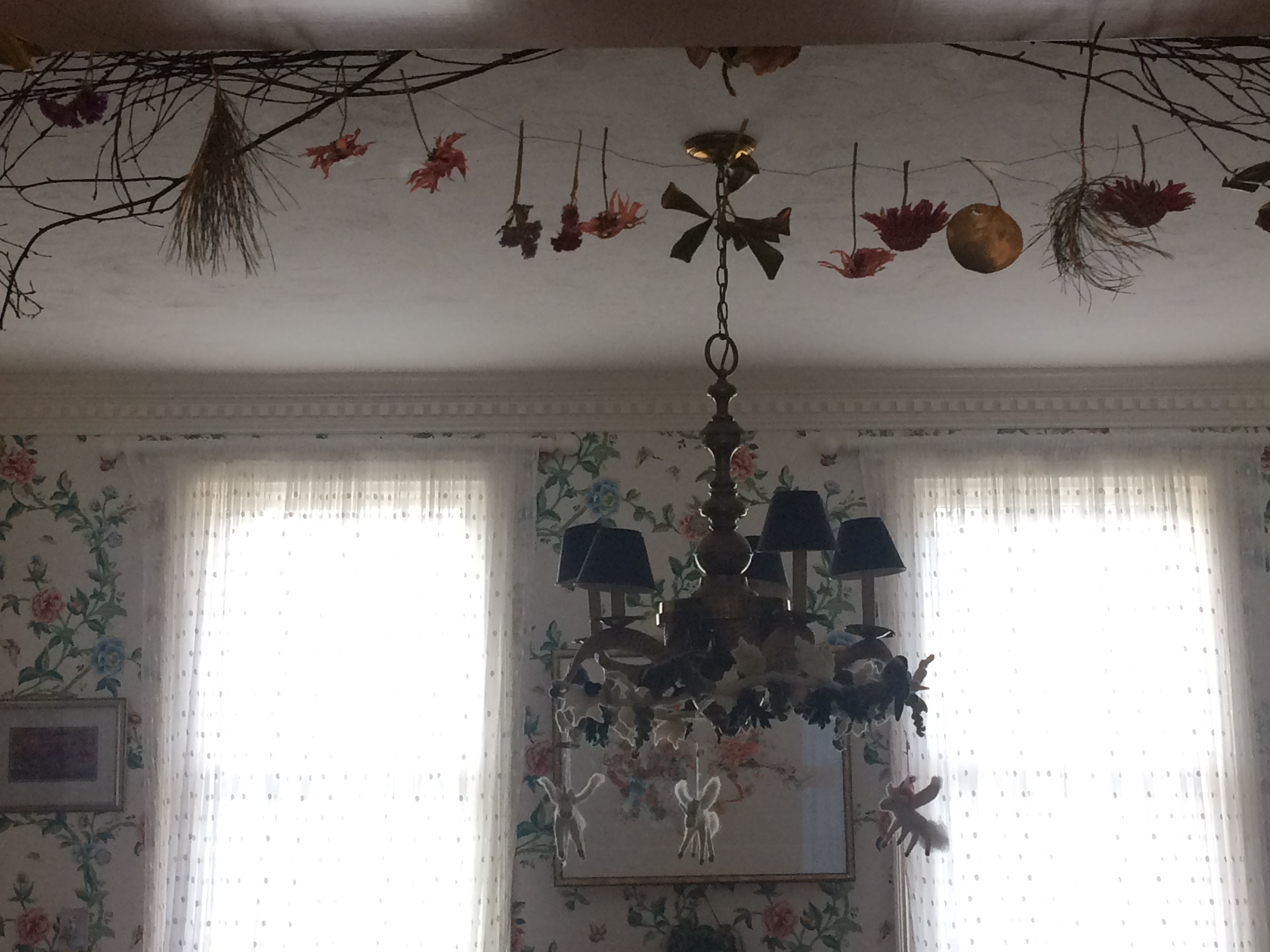
The build. I used a heavy-duty leather needle and 26-gauge floral wire. I made the hole in each dried stem just after it had finished drying, while the wood was still a little soft — wait too long and the stem splits. After each flower I gave the wire a small crimp to hold the bloom in place. I built the valance first and then the side panels, one tier at a time, hanging each finished tier in a doorway while I worked on the next. Yes, I have grandchildren, if you are wondering why there are unicorn reindeer hanging from the chandelier in the photograph. The house was very crowded for a few weeks.
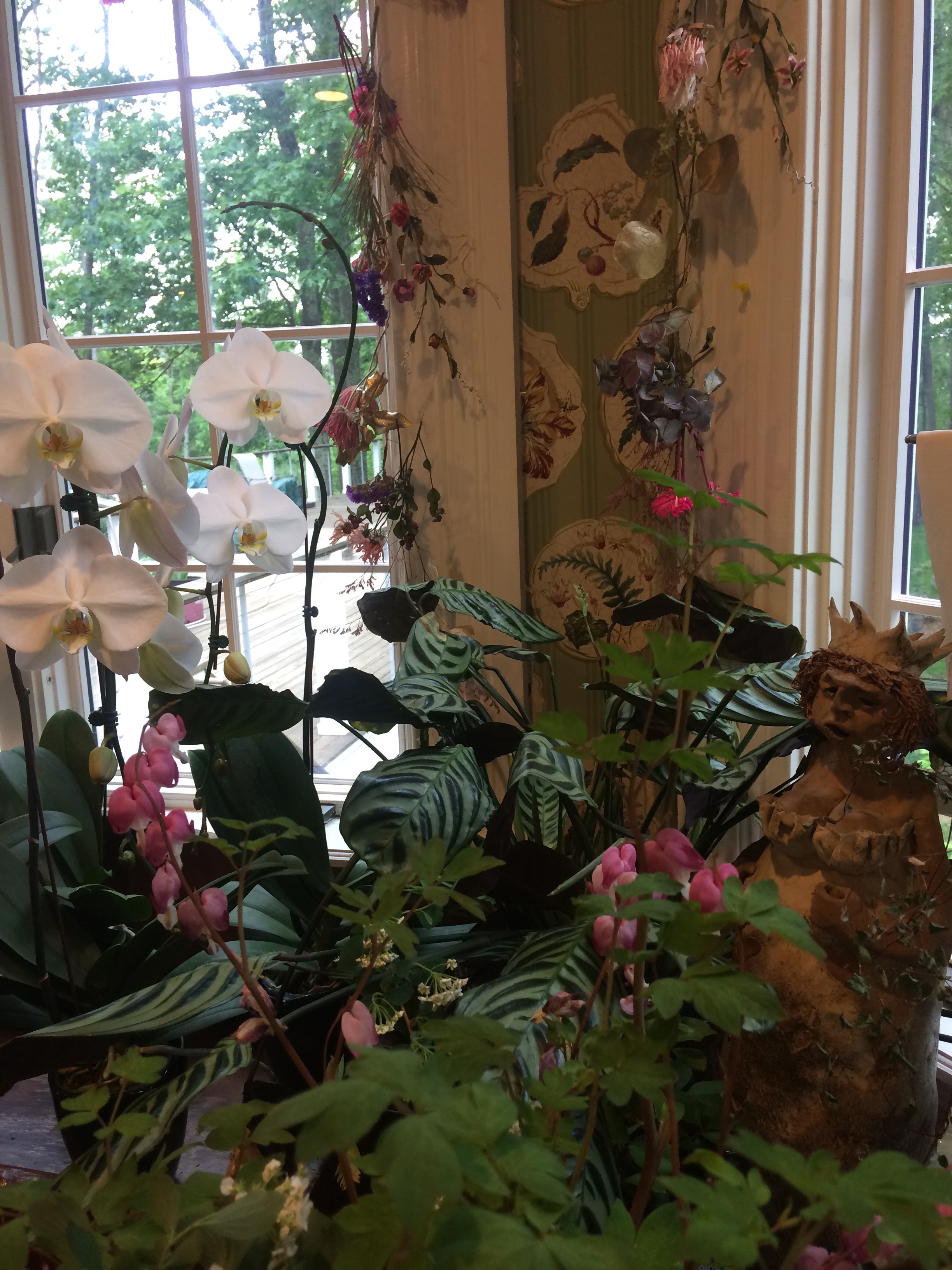
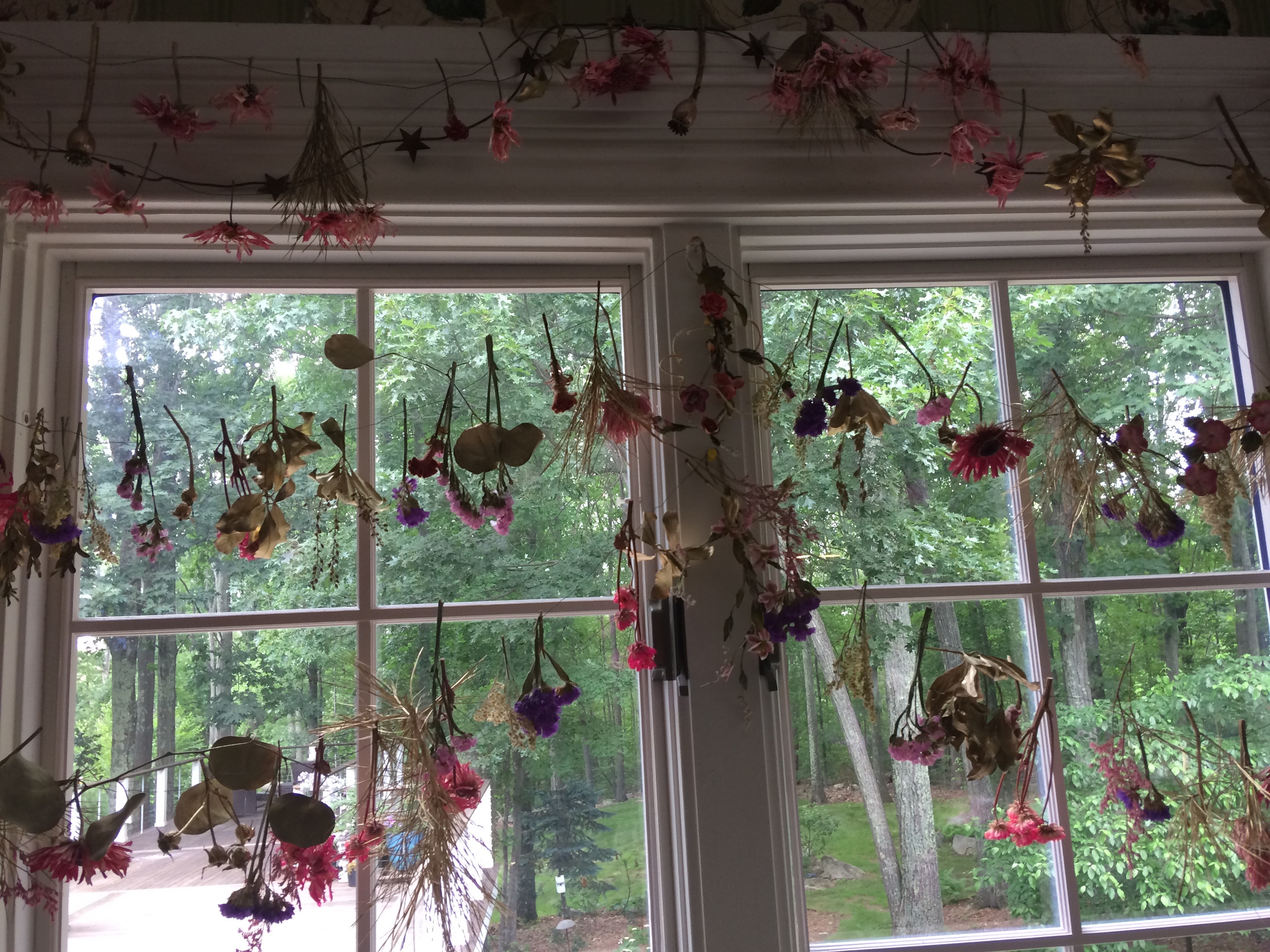
The flowers were not enough. I ran out of Christmas leftovers in the second week and went scrounging. I had a basket of eucalyptus pods left from the fall — I sprayed them gold. I had a handful of dried poppy pods — I painted them with pink and gold luster. I added evergreen needles. I added statice. Anything that wanted to come into the curtain came in. By the end I was harvesting the kitchen and the garden the way a cook harvests the back of the pantry the night before market day.
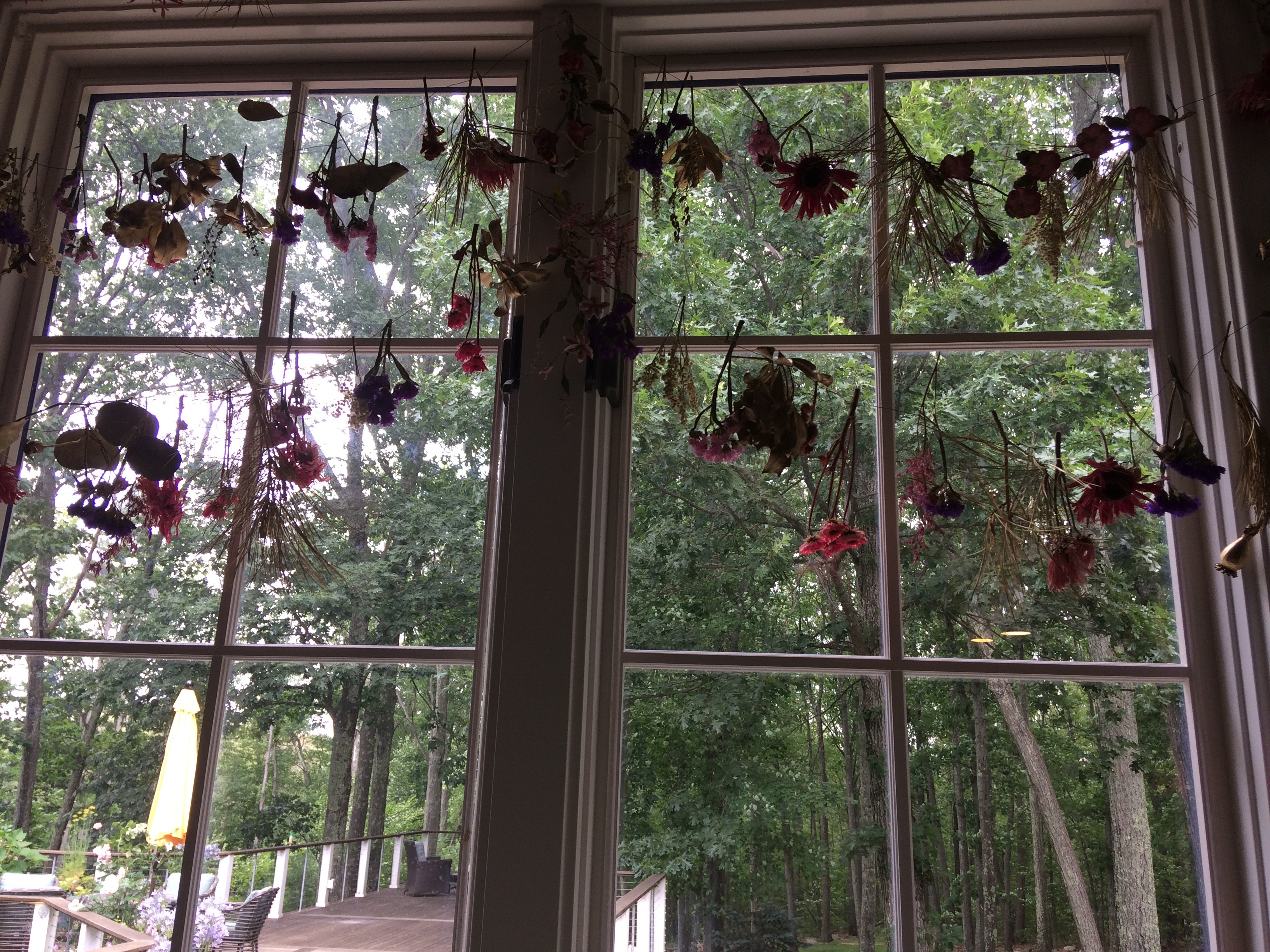
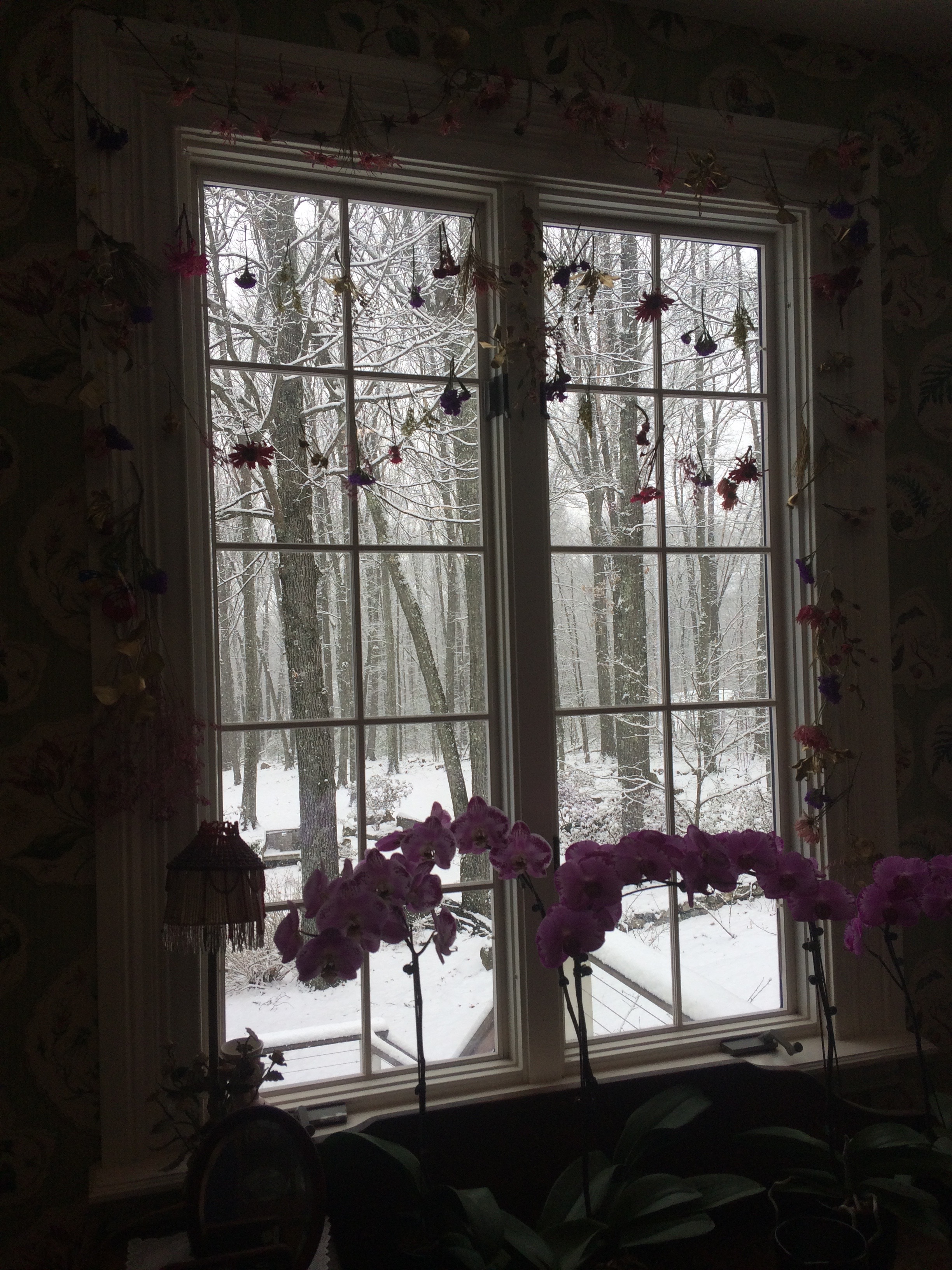
The finished curtains hang now in front of the plants. The light comes through the bronze and gold and dried-pink and quiet-green. The plants still thrive. The kitchen has its hush again. And every visitor stops at the window before they say anything else.
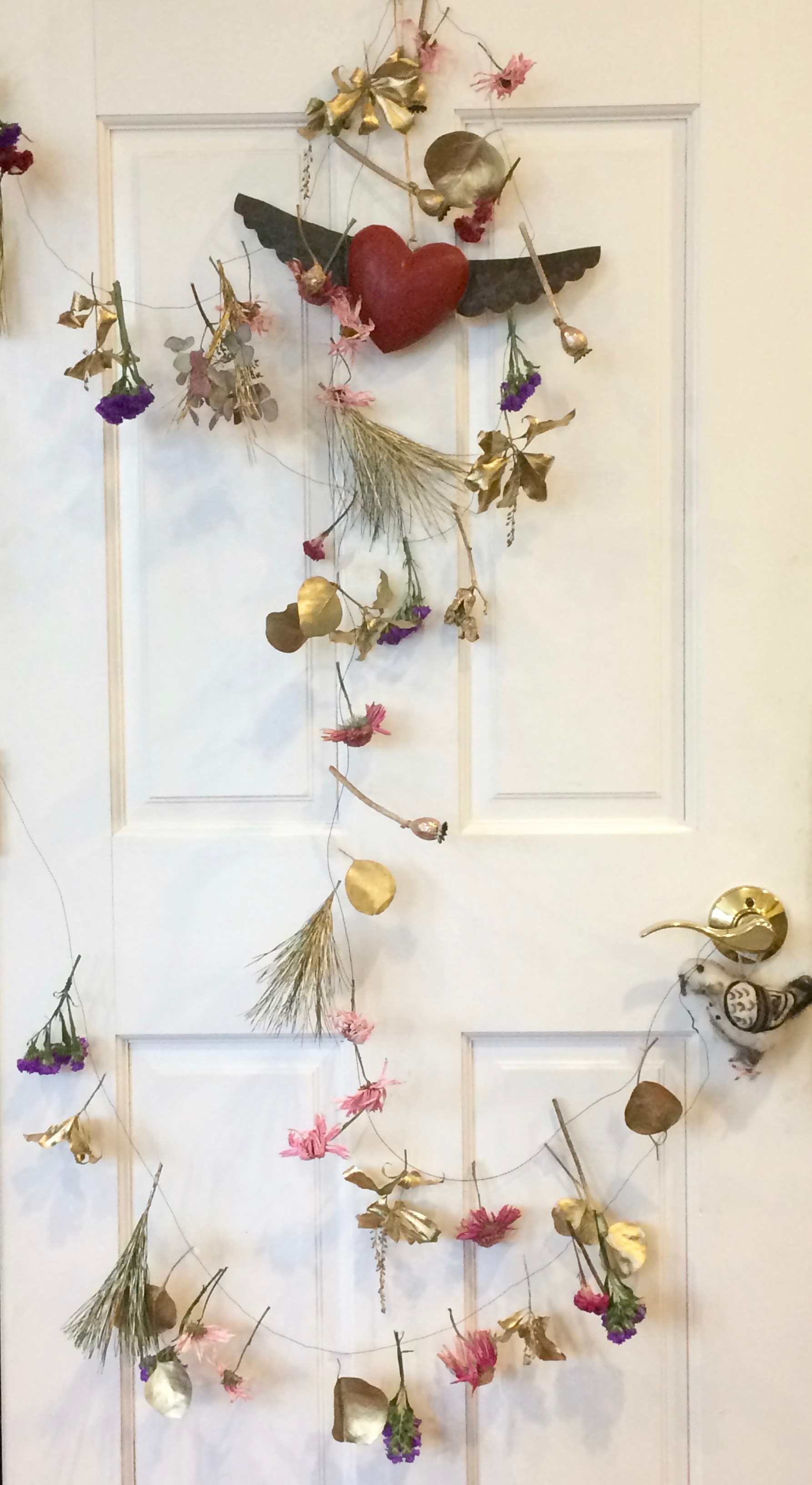
My dried-flower curtains are seven months old today, and still look wonderful. I expect them to last seven years.
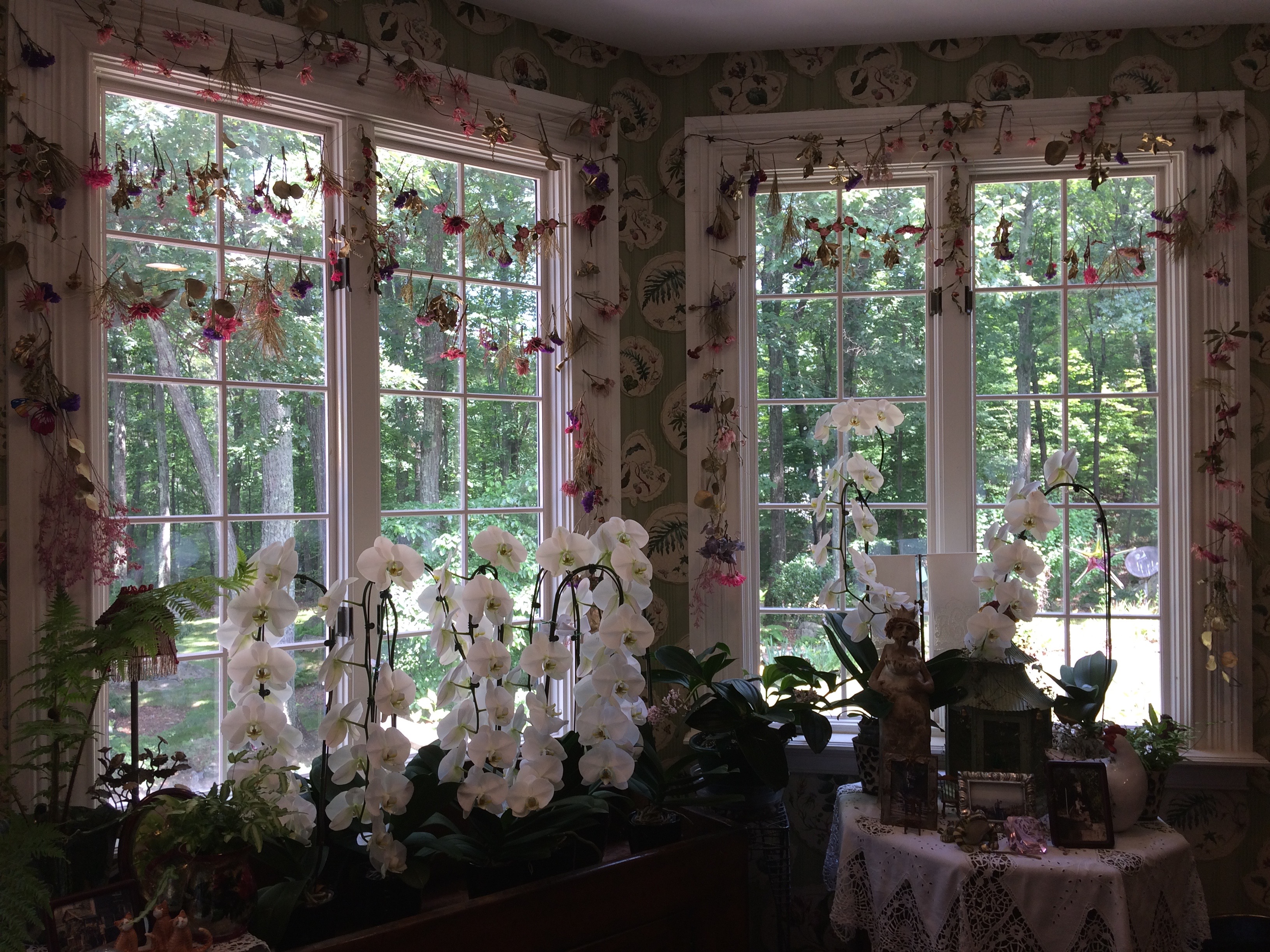
The most generous flowers in my kitchen this winter are the ones that almost ended up in the compost.