PART I · CHAPTER [TBD]
Ephemeral as Material
A Magical Incrustation
of Rime
or: how a cold walk on a borrowed morning became my favorite winter arrangement
What stopped me — a hedgerow on a freezing morning, every twig jeweled with rime, and the thought: I want to make something that looks like this.
The word rime means the frost that builds up on a surface when supercooled fog touches it — fine, white, crystalline, more architecture than weather. It is the kind of beauty that has a deadline. You can see it for an hour after sunrise, and then it is gone.
I had not planned to see any rime that day. I had planned to read a book in the car while my husband shopped for a snow blower. We all know that it will take a man just about as long to buy a new snow blower as… as… it will take a woman to find the perfect man — a very l-o-n-g time. I had no book. I went for a walk.
VISION
It was one of those lovely mornings after a winter storm — sun, blue sky, the air sharp in that way that makes your face feel new. I walked along a hedgerow at the edge of a field. The night before had left the bent and droopy foliage glittering. The rime had built up on every twig and leaf-edge so completely that the whole hedgerow looked like jewelry someone had forgotten and walked past.
It would have been enough to stand there and look at it. It would have been enough to walk back to the dealership, get in the car, and remember it for years. That is what most people would have done.
I am not most people. I stood there and I thought: when I get home I am going to make a floral arrangement that looks like this. This is the confession the rest of this chapter is built on.
Most beautiful things you see become memories. A few become projects. The difference is whether you went outside again that afternoon.
GATHER
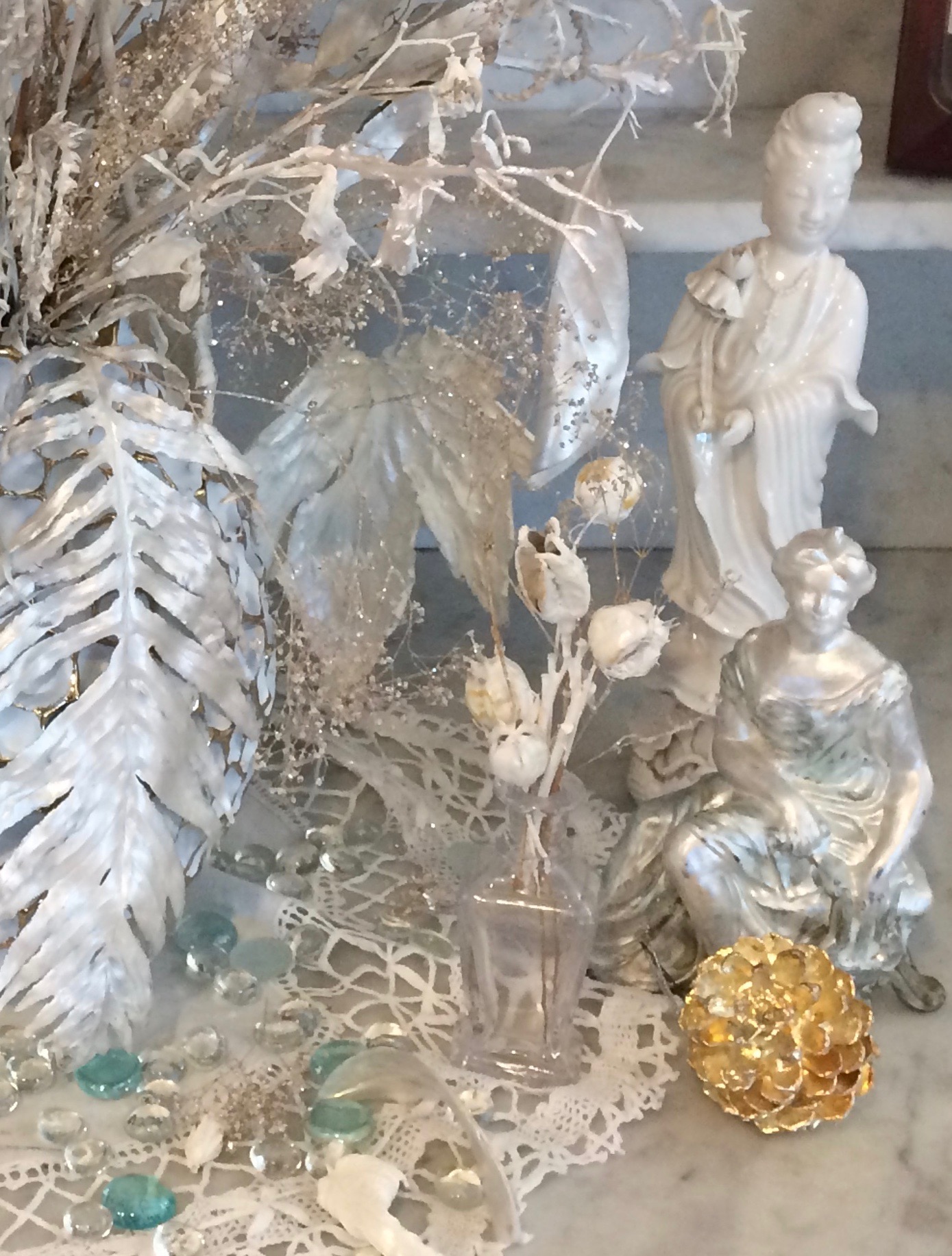
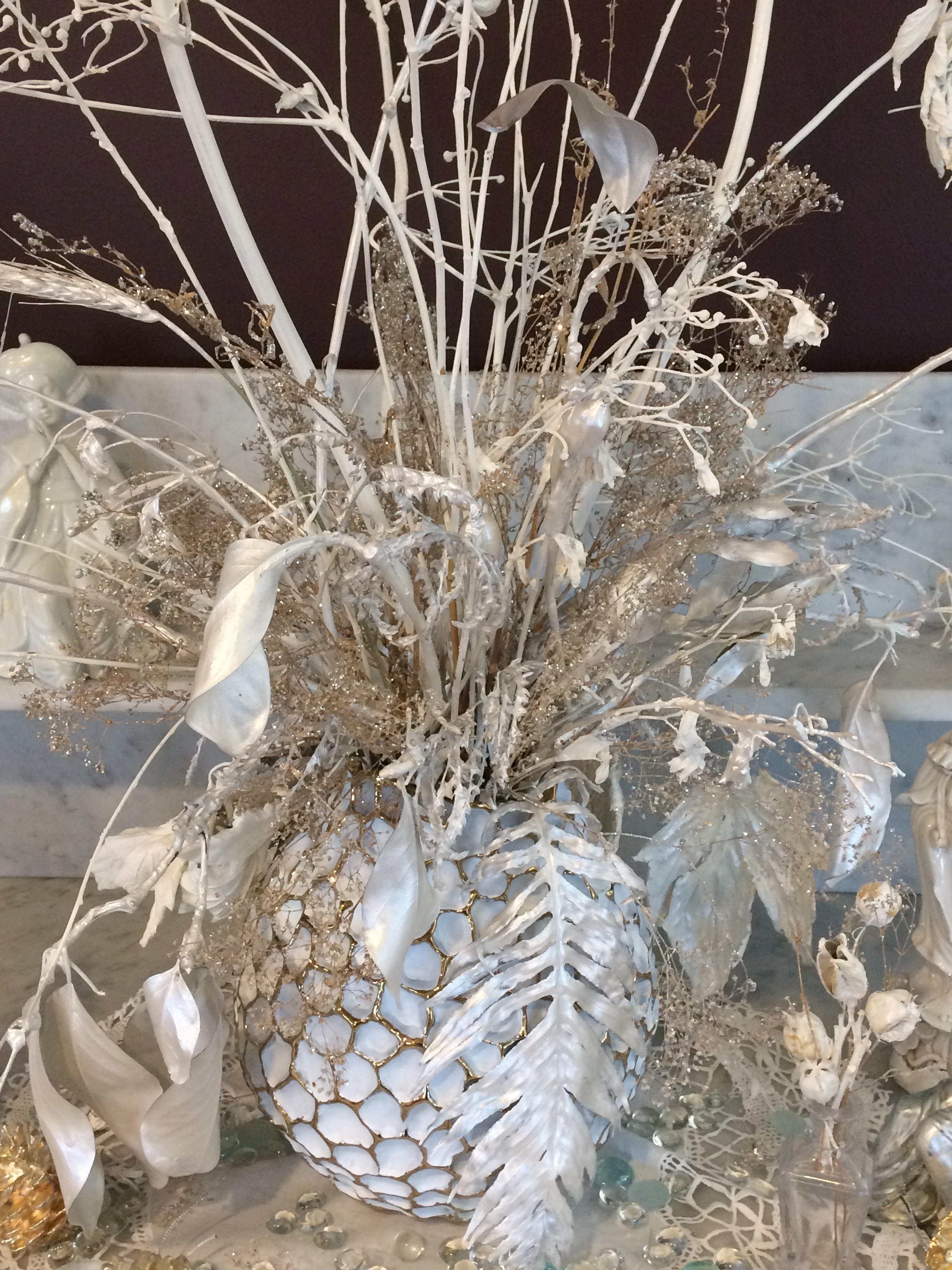
Once home, I trudged out to my gardens. Pickings were slim at this time of year — a few daylily and iris pods, magnolia branches with a few stray leaves that had managed to withstand the winds, the dried stems of gypsophila (baby's breath), Artemisia, Tricyrtis (toad lily), and Japanese anemone. None of it looked like rime. All of it had the right shape for rime — the same brittle, branching, end-of-season geometry as the hedgerow.
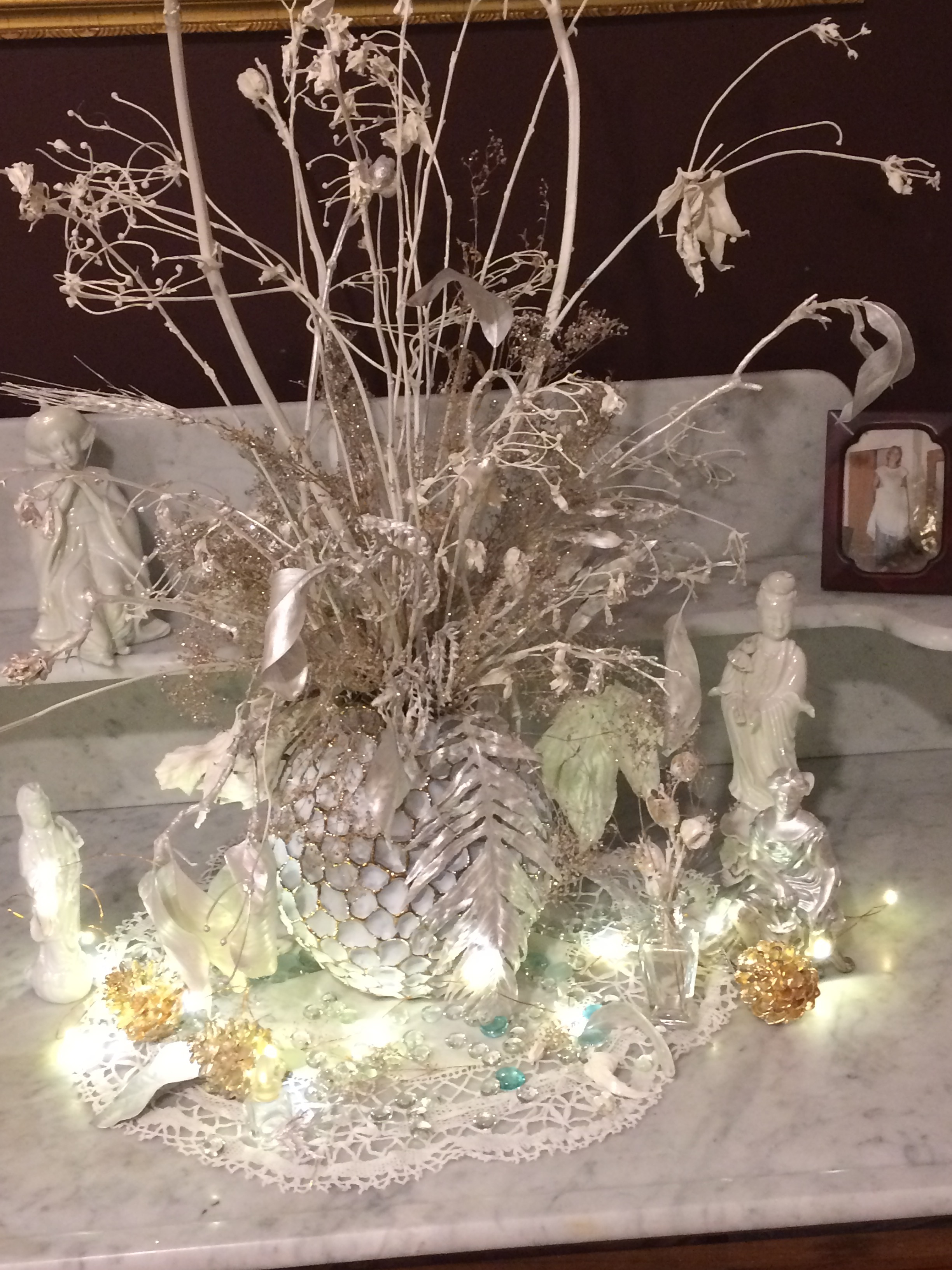
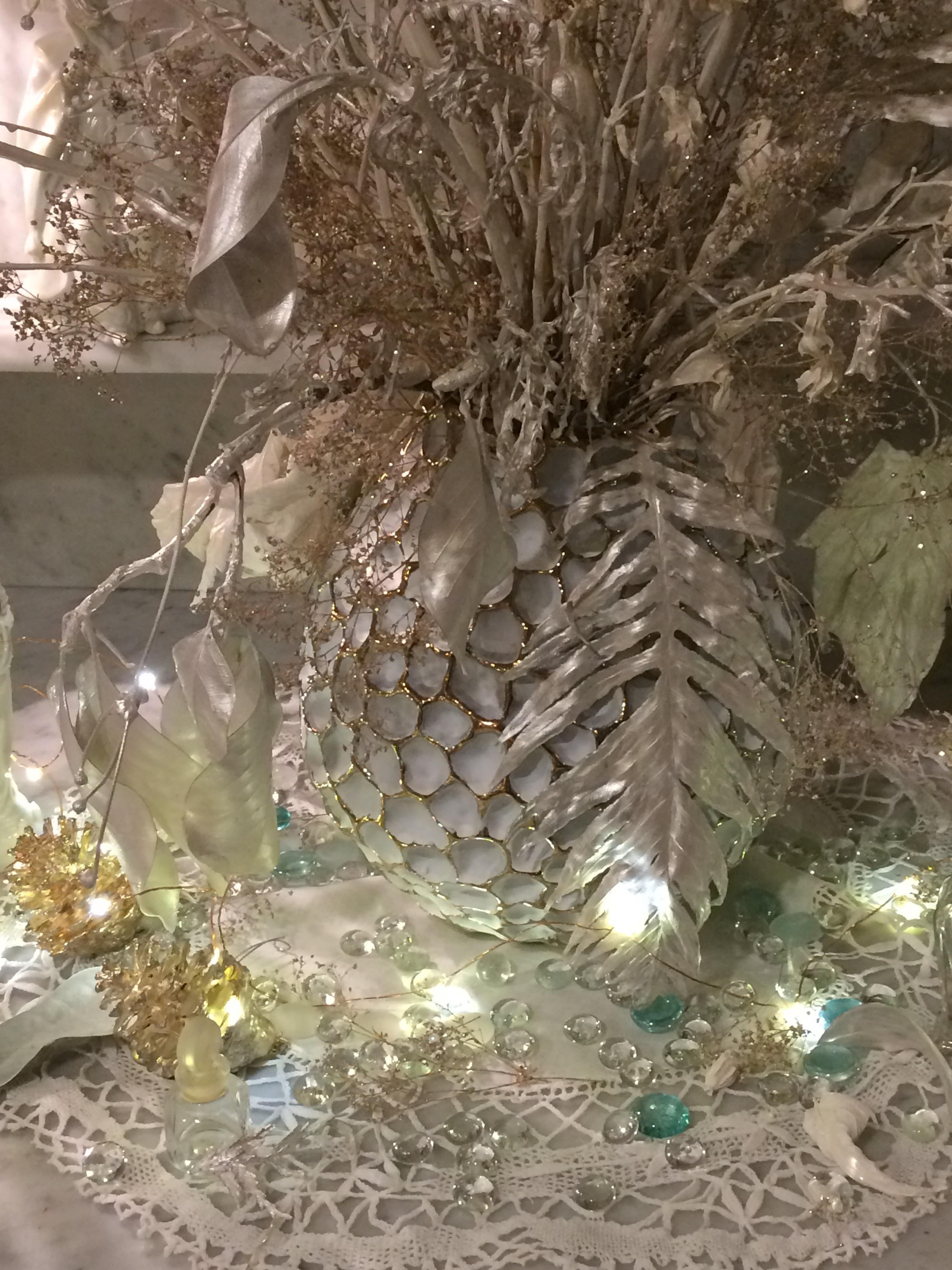
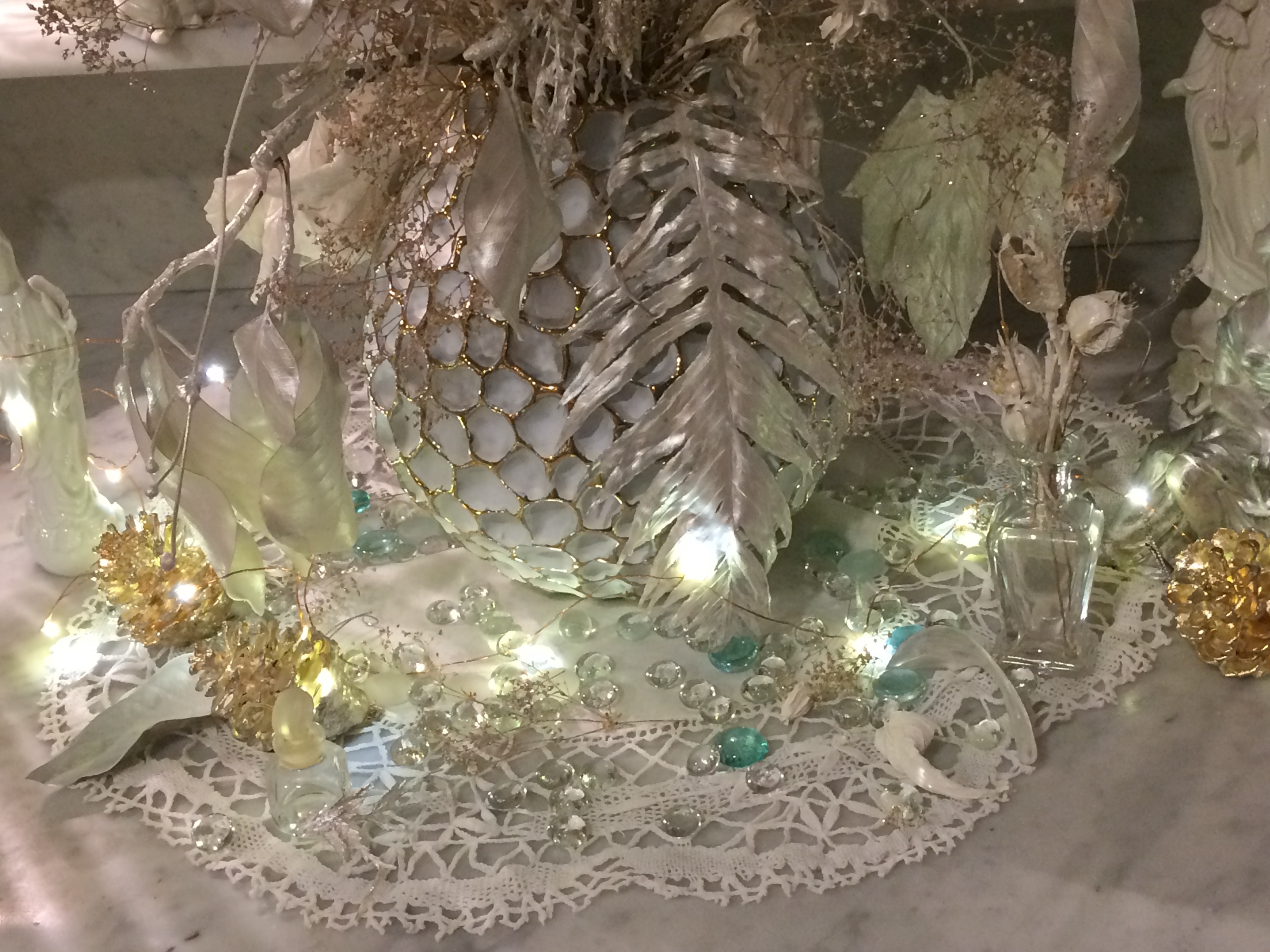
I went through the house, too. The garden gave me the bones. The house had to give me the surface. From my craft drawer: flat-back glass pebbles, glitter glue, glass glitter, off-white pearlized acrylic paint. From my linen closet: a round vintage doily with scalloped edges whose shapes echoed the curves of the vase I had in mind. From the back of a shelf: a string of small fairy lights and a tiny perfume bottle. The translation needs a vocabulary, and a vocabulary is built out of what you happen to already own.
TRANSLATE
I sprayed the baby's breath and the Artemisia with glitter glue, then dipped each stem into the glass glitter for a very ethereal, delicate, icy-crystal look. I hand-dipped or brush-painted the remaining foliage with the off-white pearlized acrylic. No spray painting, unless you will be satisfied with inferior results — this is one of the few rules I keep about anything.
I set the doily on the table. I strewed the glass pebbles across it for the look of melted ice. I built the arrangement up off the doily, vase at the center, the glittered baby's breath threading through the painted magnolia and the iris pods. As I worked, delicate bits and pieces fell off the stems and landed on the doily — exactly as had happened to the foliage on the hedgerow when the wind moved through it. I left every fallen piece where it landed. That accident is the most honest thing about the arrangement.
For evening charm, I added a very small string of fairy lights at the base — only at the base, never threaded through. The light had to come from underneath, the way the morning sun had been coming from underneath the hedgerow at the angle I had seen it. To emphasize the serenity, I added a couple of dainty oriental figures, some gilded pine cones, and the small perfume bottle filled with love-in-a-mist seed pods.
It was finished by suppertime. The hedgerow itself was gone by suppertime too.
Principle: Ephemeral as Material. The most permanent things in a beautiful house are often copies of the things that didn't last — the candle's shadow becoming a painted ceiling, the autumn leaf becoming a pressed glass coaster, the rime on the hedgerow becoming a dining-room arrangement that sits on the table until April. Ephemeral things don't ask to be saved. They ask to be answered.
What I saw on the hedgerow is now in my dining room. That is the only kind of magic I have ever believed in.